Phone Addiction in Teens: What Parents Need to Know (And Do)
Teens aged 13-17 spend over 7 hours daily on screens outside of schoolwork. 50% identify as addicted to their phones. 59% of their parents agree. If you’re a parent reading this, you already know the problem. You’re looking for a solution that doesn’t destroy your relationship with your kid.
The parental control trap
Most parents’ first instinct is surveillance software. Monitor texts. Block apps. Set time limits. Get a dashboard.
This works until your teen is about 13. After that, it backfires. Teens are developmentally wired to push against external control. Install monitoring software and you’re not teaching self-regulation. You’re teaching evasion. They learn alt accounts, VPNs, friends’ phones, and browser workarounds.
The bigger cost: trust. Almost half of teenagers think their parents get distracted by their own phones. Installing surveillance while you scroll Instagram at dinner teaches a lesson you didn’t intend.
For a full breakdown of why parental controls fail for teens and what to do instead, read our parental control alternatives guide.
What’s actually happening to your teen
The mental health numbers are ugly. 1 in 4 teens with 4+ hours daily screen time experienced anxiety (27.1%) or depression (25.9%) in the past two weeks. The risk doubles past the 4-hour mark.
67% of teenagers report late-night phone use has disrupted their sleep. Sleep deprivation in teens leads to worse academic performance, higher irritability, and increased susceptibility to the same anxiety and depression that screen time worsens. Another feedback loop.
The social layer is what makes teen phone addiction so hard to break. Your teen’s social life runs through their phone. Group chats, event planning, meme sharing, relationship maintenance — it all happens on Instagram, Snapchat, and TikTok. Asking a 15-year-old to delete social media is asking them to exit their social world. That’s not a realistic ask.
What parents can actually do
Start with yourself. Check your own screen time. If it’s 4+ hours, fix yours first. Your teen watches what you do, not what you say. If your phone sits on the dinner table, theirs will too. Model the behavior you want to see.
Have the conversation, not the lecture. Ask your teen: “How much time do you think you spend on your phone?” Then show them the actual number from their screen time tracker. The gap between perception and reality usually surprises them. That surprise is the opening for a conversation, not a rule.
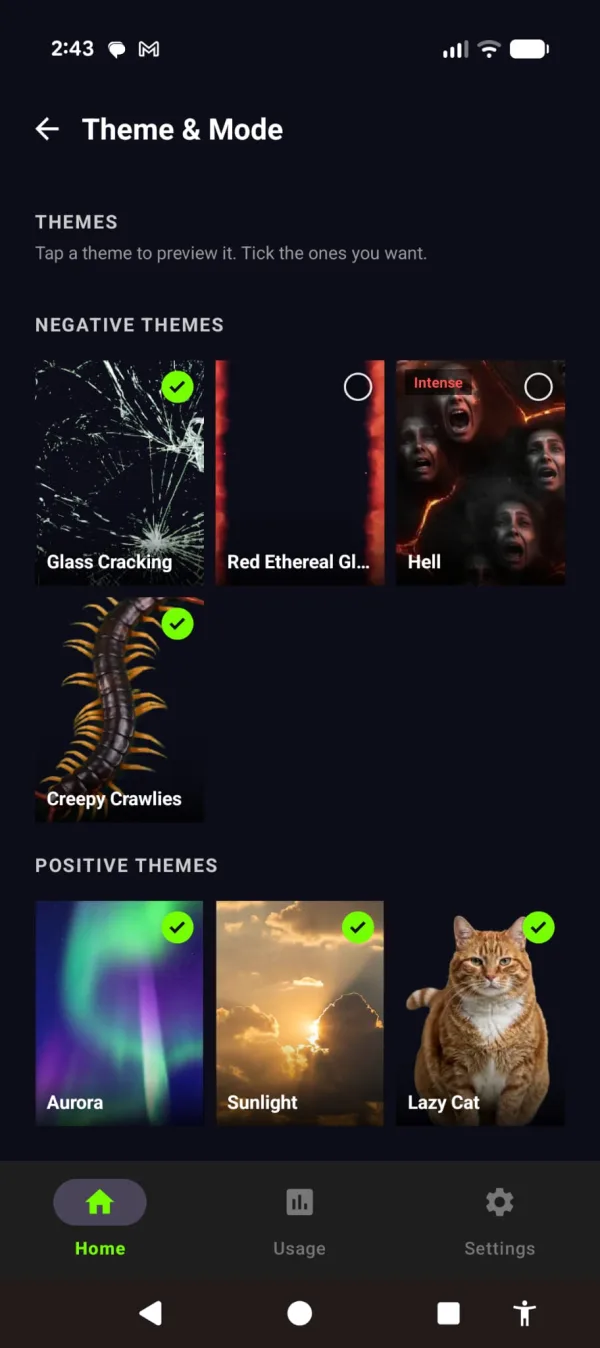
Install Cursed Screen together. Not on their phone secretly. Together. As a family experiment. The app makes the phone’s screen progressively ugly the longer you use it — flames, bugs, cracking glass. Let your teen pick their theme. Let them set their own grace period. The teen keeps full control: no surveillance, no parent dashboard, no remote access.
Let the teen pick the curse. Ownership beats enforcement.
The phone changes. The relationship doesn’t. When your teen sees hellfire creeping across their TikTok feed, that’s the phone telling them they’ve been on too long. Not you.
Whitelist the social essentials. Messaging apps, school tools, music. The goal isn’t to disconnect your teen from their friends. The goal is to make the doomscrolling portion uncomfortable while keeping the functional and social portions intact.
Don’t monitor their settings. If they change the grace period or disable the app, that’s their choice. The point is self-regulation, not parent-imposed rules. If they go back to 7 hours a day, that’s information for a conversation, not a justification for reinstalling surveillance.
The family approach
The most effective version: everyone installs Cursed Screen. Parents and teens. Same app, same consequences. Nobody is exempt.
Dinner table conversation shifts from “get off your phone” to “look how bad my screen looks right now.” That’s a better conversation. It’s collaborative instead of adversarial. It’s funny instead of punitive.
Cursed Screen has a free trial on Android. Subscribe monthly or annually, or pay once for lifetime access. No parent dashboard. No personal data collected. Just phones that get ugly when anyone in the family uses them too long.
Your teen is 7 hours deep in their phone. Lecturing won’t fix it. Surveilling won’t fix it. Making the phone itself tell them they’ve been on too long might.
Reduce your screen time — without blocking anything
Cursed Screen makes your phone progressively uglier the longer you use it. No blocking, no willpower needed — you'll want to put it down.
Get Cursed Screen on Google Play